LVT, SPC or sheet vinyl? Compare the three types of vinyl flooring by cost, waterproofing, comfort and installation, and find the right floor for every room.
Types of vinyl flooring explained: LVT, SPC and sheet vinyl
Vinyl flooring comes in three main types: glue down LVT, SPC click vinyl, and sheet vinyl. Glue down LVT is bonded to the subfloor for stability and is best for large, high-traffic spaces. SPC is a rigid, 100% waterproof floor that clicks together and is well suited to bathrooms, kitchens and DIY installation. Sheet vinyl is a soft, cushioned floor supplied on a roll, usually the most affordable option and a reliable choice for bathrooms and conservatories.
This guide explains how each type works, its strengths and drawbacks, and which floor suits which room, so you can choose with confidence before you order.
The three types of vinyl flooring at a glance
How LVT, SPC and sheet vinyl compare
| Type |
Also known as |
Installation |
Water resistance |
Underfoot feel |
Best for |
Relative cost |
| Glue down LVT |
Luxury vinyl tile |
Bonded to the subfloor with adhesive |
Water resistant |
Firm, warm |
Large, open-plan and high-traffic spaces |
Mid |
| SPC |
Click LVT, click vinyl, SPC click, waterproof LVT |
Floating click-lock, no glue |
100% waterproof |
Firm and rigid |
Bathrooms, kitchens, basements, DIY installs |
Mid to high |
| Sheet vinyl |
Lino |
Rolled out, laid tight to the walls |
Excellent surface water resistance |
Soft, cushioned, warm |
Bathrooms, conservatories, budget projects |
Low |
Glue down LVT (luxury vinyl tile)
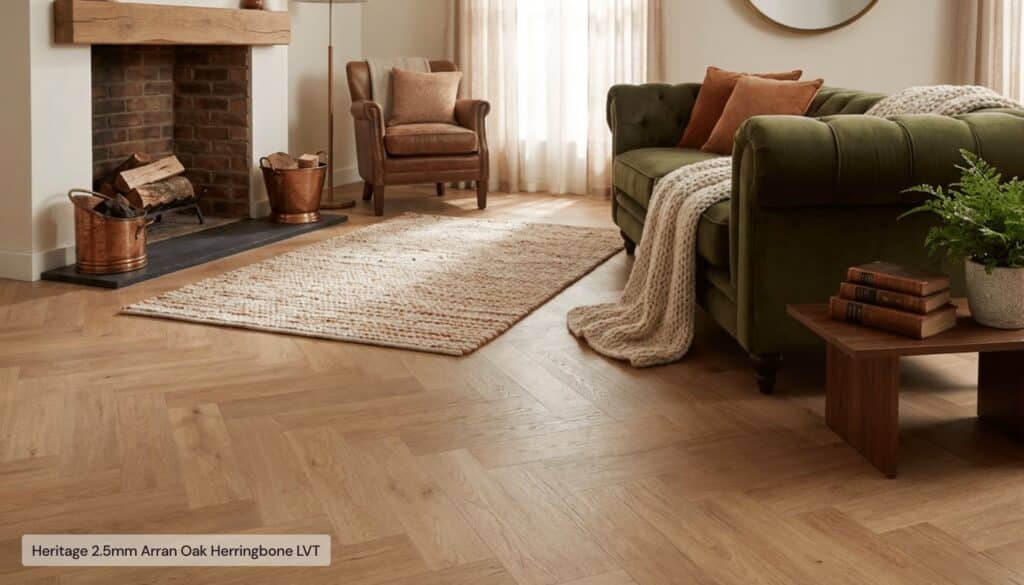
Glue down LVT is made of individual vinyl planks or tiles bonded directly to the subfloor with a specialist adhesive. Because it is fixed tightly to the ground, it is very stable and will not shift under heavy foot traffic or rolling loads, which makes it a favourite for large, open-plan spaces and commercial environments.
Pros
- High stability. It does not expand or contract significantly, so it can be laid across large areas without transition strips.
- Easy repairs. If a single plank is badly damaged, you can heat it, scrape it up and glue down a replacement.
- Durability. It is extremely hard-wearing and well suited to heavy-traffic areas.
- Texture. Our glue down floors feature high-quality embossing and texture that often mimics real wood grain.
Cons
- Subfloor preparation. It needs a perfectly flat, smooth subfloor. Any bumps or debris will show through, an effect known as telegraphing.
- Installation. It typically calls for professional fitting or competent DIY ability.
- Difficult removal. Lifting a glue down floor in future is labour-intensive.
SPC flooring (stone plastic composite)
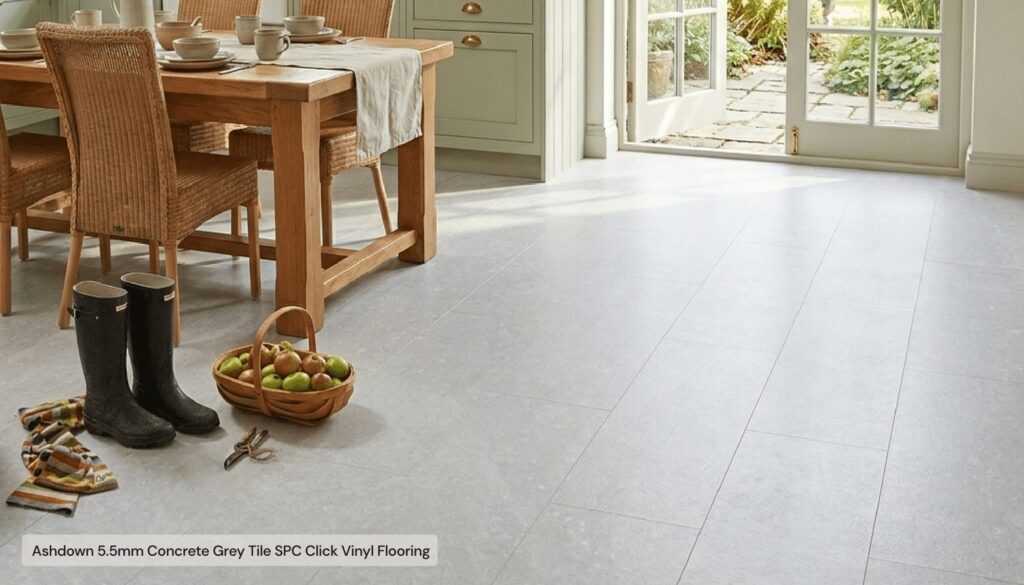
SPC flooring is a rigid-core luxury vinyl that clicks together to form a floating floor over your subfloor. Its core is a mix of natural limestone powder, polyvinyl chloride and stabilisers, giving it a dense, highly durable structure that is completely waterproof. It is also sold as click LVT, click vinyl, SPC click or waterproof LVT.
Pros
- 100% waterproof. It will not swell or warp when exposed to water, making it ideal for bathrooms, kitchens and basements. See the note on edges below, which is worth considering before installation.
- Forgiving on subfloors. The rigid planks span minor subfloor imperfections without telegraphing them to the surface. Minor deviations can be covered, but the subfloor must still be SR1, meaning a maximum deviation of plus or minus 3mm over a 2-metre straightedge.
- DIY-friendly. The click-lock system needs no messy glue and is relatively easy to install yourself, with none of the waiting for adhesive to set.
- Built-in underlay. The attached underlay helps absorb minor imperfections in the subfloor.
- Fast installation. Because click flooring needs little preparation, your old floor can often be removed and the new SPC floor laid and finished within a day.
Cons
- Hardness. The rigid core makes it less forgiving and firmer underfoot than traditional LVT or sheet vinyl.
- Acoustics. It can sound hollow or clicky underfoot if it is not paired with a high-quality acoustic underlay.
- Weight and cutting. The stone composite makes the boxes heavy and a little harder to cut than standard vinyl. Use a jigsaw or a sharp blade, and always hide the cut edges rather than leaving them on display.
- Edges. A gap around the perimeter equal to the thickness of the flooring must be left. If the skirting boards are removed before installation, they will hide this gap. If the floor is being fitted into a finished space such as a tiled bathroom, the perimeter gap must be left and covered with a suitable trim such as a scotia.
Sheet vinyl flooring
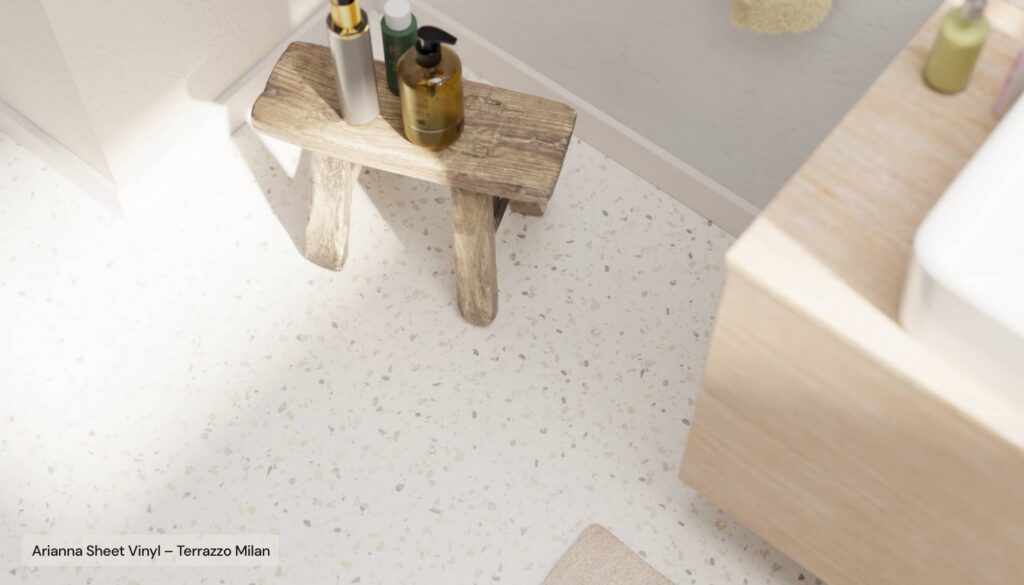
Sheet vinyl comes in large, continuous rolls, usually 2, 3 and 4 metres wide, rather than individual planks or tiles. It has a fibreglass cushion backing that makes it soft, warm and comfortable, and because it is rolled out in large sheets it creates a nearly seamless surface. It is sometimes called lino.
Pros
- Budget-friendly. It is usually the most affordable of the three, both in material and installation costs.
- Moisture protection. With few or no seams, it offers excellent surface water resistance, which suits splash-prone areas and bathrooms with young children. It is laid tight to the wall and skirting edges with no need for an expansion gap.
- Comfort. The cushioned backing gives a soft, warm and quiet feel underfoot.
- Fast transformations. Sheet vinyl can transform a room in a matter of minutes, at very little cost.
Cons
- Repairs. If the floor is damaged you cannot simply replace a section. The whole sheet often needs replacing, or a patch that remains visible. In practice, modern vinyl floors are very strong and damage is rarely an issue.
- Installation quirks. Manoeuvring a large, heavy sheet into a room with lots of corners can be awkward.
Which vinyl flooring is best for each room?
Which vinyl flooring is best for living areas?
For kitchens, dining rooms, hallways and living rooms, we usually recommend glue down LVT, installed by a professional or a competent DIYer. The level of preparation involved in a long-life installation is usually best handled by a professional.
If you would rather fit the floor yourself and are not confident tackling glue down LVT, SPC is the ideal alternative. Follow the installation guidelines and leave adequate expansion around the perimeter, and you will get a lasting result.
Which vinyl flooring is best for a bathroom?
For bathrooms and shower rooms, we always recommend sheet vinyl as the first option. Thanks to its waterproof qualities, once it is laid and sealed around the edge it gives complete peace of mind. SPC is also 100% waterproof and a strong choice for a bathroom where a plank look is preferred.
Which vinyl flooring is best for a conservatory?
Conservatories experience large temperature swings, which often means LVT and SPC are not suitable unless they are professionally installed with adhesives not commonly available to the DIY market. Sheet vinyl is a great choice here, because it will not expand and contract across individual planks in the way that can cause gaps or swelling with LVT and SPC.
Frequently asked questions
Is vinyl flooring waterproof?
It depends on the type. SPC click vinyl is 100% waterproof and will not swell or warp when exposed to water. Sheet vinyl offers excellent surface water resistance thanks to its near-seamless finish. Glue down LVT is water resistant and stable, but the three differ in how they handle standing water.
What is the difference between LVT and SPC?
Glue down LVT is bonded to the subfloor with adhesive, which makes it very stable but harder to remove later. SPC is a rigid-core floor that clicks together and floats over the subfloor, needs no glue, and is 100% waterproof, which makes it more DIY-friendly.
Can I install vinyl flooring myself?
SPC click vinyl is the most DIY-friendly, since its click-lock system needs no glue. Glue down LVT is better suited to a professional or a competent DIYer because of the subfloor preparation involved. Sheet vinyl is affordable but can be awkward to manoeuvre in rooms with many corners.
Is SPC or sheet vinyl better for a bathroom?
Both work well in a bathroom. Sheet vinyl is our first recommendation because its near-seamless surface gives complete peace of mind once sealed at the edges. SPC is a good alternative if you prefer the look of planks, as it is also 100% waterproof.
Do you need underlay for SPC flooring?
SPC has a built-in underlay that helps absorb minor subfloor imperfections. For the best result underfoot, it is still worth pairing it with a high-quality acoustic underlay, since SPC can otherwise sound hollow or clicky when walked on.
What expansion gap does click vinyl need?
SPC click vinyl needs a perimeter gap equal to the thickness of the flooring. Removing the skirting boards before fitting will hide this gap. In a finished space such as a tiled bathroom, leave the gap and cover it with a suitable trim such as a scotia.
Is sheet vinyl the same as lino?
Sheet vinyl is often called lino. It is supplied on a roll, usually 2, 3 or 4 metres wide, with a cushioned fibreglass backing that makes it soft and warm underfoot.
Which vinyl flooring is the cheapest?
Sheet vinyl is usually the most affordable option, in both material and installation costs, which makes it a popular choice for budget-conscious projects and quick room transformations.
 Free Delivery*
 Order Samples