Kitchens have a hard life. There’s the morning rush, muddy boots coming in from the garden, pasta water boiling over and the odd jar of sauce slipping out of someone’s hand. So the best flooring for kitchens has to look good and put up with all of that without needing much looking after.
In this guide we go through the main kitchen flooring options, what each one does well and where it falls short, and the kitchen-friendly floors our customers sample and order the most.
What to Look for in a Kitchen Floor
Before you get into colours and finishes, it’s worth thinking about what the floor actually has to do. In most kitchens it comes down to six things.
- Water resistance. Spills, splashes from the sink and the dishwasher that leaks once every few years. With a waterproof floor, a spill is just a spill.
- Easy cleaning. Crumbs, grease and sticky patches are part of kitchen life. Smooth floors with a protective top layer wipe clean, while grout lines and deep textures hang on to dirt.
- Comfort underfoot. You spend a lot of time standing in a kitchen. Vinyl is softer and warmer than stone or ceramic, which your feet and back will thank you for, and a dropped glass is less likely to smash.
- Durability. Chairs scraping, pets and heavy traffic from the back door all take their toll. Look at the wear layer, which is the clear protective layer on top. The thicker it is, the longer the floor will look good.
- Grip. Kitchen floors get wet. Where a floor has a slip rating, it’s worth checking.
- Underfloor heating. If you have it, or you’re adding it as part of a new kitchen, make sure the floor is compatible.
Kitchen Flooring Options Compared
Here’s how the most common kitchen floors stack up against each other.
For most kitchens, we’d go for vinyl. SPC click vinyl and glue down LVT are both fully waterproof, comfortable to stand on and easy to keep clean, and they come in convincing wood, stone and tile looks. If you’re working to a tighter budget, sheet vinyl ticks most of the same boxes for less. If you’d like a closer look at how the three compare, our guide to the types of vinyl flooring goes into more detail.
SPC Click Vinyl for Kitchens
SPC stands for stone plastic composite. It’s a click vinyl built around a rigid core made with crushed stone, so it feels solid underfoot and won’t flex over small bumps in the subfloor. The planks and tiles click together and float over the floor below, with no glue involved, which makes it one of the easiest kitchen floors to fit yourself.
Of all the floors that suit a kitchen, SPC is the one our customers order most, and it’s easy to see why:
- It’s fully waterproof, so spills and splashes won’t get into it.
- Our Ashdown range is 5.5mm thick with a built-in iXPE foam underlay, so there’s no separate underlay to buy or fit.
- Ashdown has an R10 slip rating, which gives it a reassuring grip for a kitchen.
- Our Vestige range is a thicker 8mm, with a 0.5mm wear layer for extra protection against everyday scuffs.
- Both ranges work with underfloor heating up to 27°C and come with a residential lifetime warranty.
One thing to plan for: a floating floor needs room to expand and contract slightly as the temperature changes. That means it should be fitted up to your kitchen units and island rather than underneath them, with the expansion gap the fitting guide asks for. The kickboards and skirting will hide the gap. If you’re fitting a brand new kitchen, it’s worth talking to your kitchen fitter about this early on.
Torn between SPC and glue down? Our guide to SPC vs glue down LVT compares the two side by side.
Glue Down LVT for Kitchens
Glue down LVT (luxury vinyl tile) is stuck directly to the subfloor. It sits completely flat, feels solid and quiet underfoot and, because it’s fixed in place, it doesn’t need expansion gaps in the same way a floating floor does. That makes it a good fit for big open-plan kitchens and for patterns like herringbone that look best running through without breaks.
Our River Stone tiles and Heritage herringbone are both 2.5mm with a 0.55mm wear layer, the thickest wear layer of any floor in this guide. River Stone was tested with a wet pendulum value of 41, which puts it in the low slip risk category. Both are fully waterproof and work with underfloor heating.
The trade-off is preparation. Glue down LVT needs a smooth, level subfloor, which usually means a screed first, and it’s normally laid by a professional fitter. Browse our glue down LVT, tile effect LVT and herringbone LVT ranges.
Sheet Vinyl for Kitchens
Sheet vinyl, or lino as a lot of people still call it, comes off a roll in 2m, 3m and 4m widths. Most kitchens can be done in a single piece, so there are no seams for water to find its way into. It’s soft and quiet to walk on, and it’s the most affordable way to get a waterproof kitchen floor.
All of our sheet vinyl is waterproof and pet friendly. Ranges like Arianna are 2.75mm thick with an extra thick acoustic cushion backing and a 15 year warranty, while Kefi has a felt backing and a 12 year warranty. Patterned designs are a big part of the appeal too, from terrazzo to Victorian tile effects.
The wear layers on sheet vinyl are thinner than on LVT and SPC, at 0.25mm to 0.35mm on the ranges above. It will still last well in a normal family kitchen, but if yours takes a real battering, the thicker wear layer on LVT or SPC will go further.
What About Wood, Laminate and Tiles?
Engineered wood has a real wood top layer, and nothing quite matches it for warmth and character. It isn’t waterproof though, so it can work in a kitchen if you’re happy to wipe up spills straight away and you like the way real wood marks and changes over time. See our engineered wood flooring.
Laminate is affordable and easy to fit, but most of it doesn’t cope well with standing water, which can get into the joints and make them swell. If you like the look of laminate, click vinyl gives you a very similar wood effect and is fully waterproof.
Ceramic and porcelain tiles are very hard-wearing and waterproof once they’re grouted and sealed. They’re also hard and cold underfoot unless you have underfloor heating, dropped plates and glasses rarely survive, and fitting takes time. Tile effect vinyl gives you the same look in a floor that’s warmer, softer and quicker to lay.
Our Most Popular Kitchen Floors
These are the kitchen-friendly floors our customers sample and order the most. Every one of them is waterproof and works with underfloor heating.
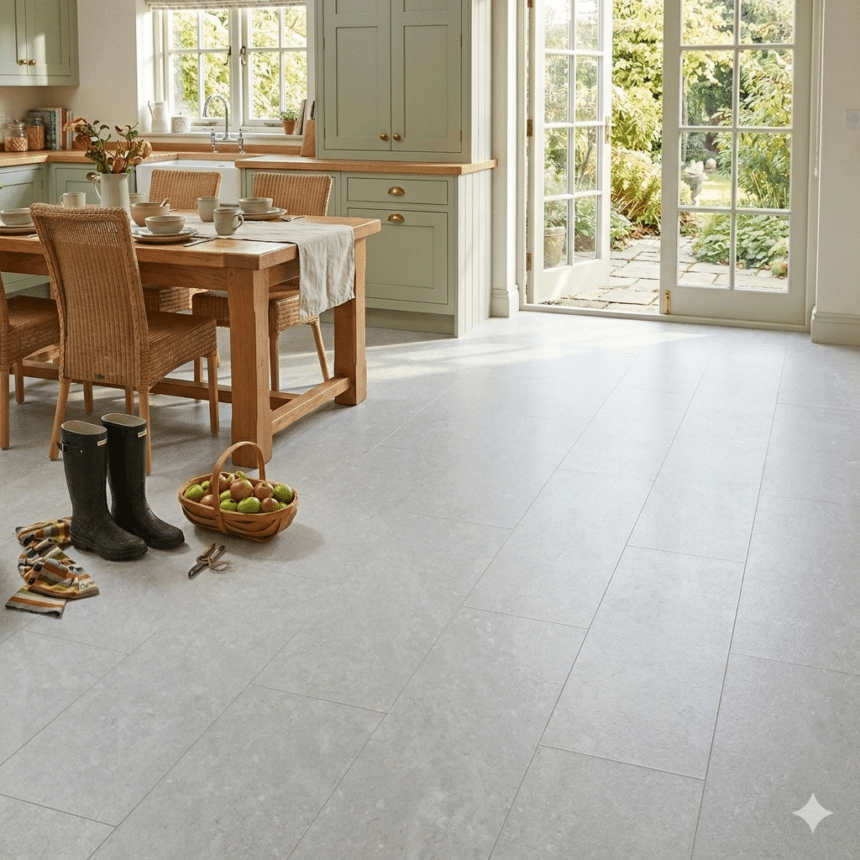
Ashdown Mid Grey Slate Tile SPC
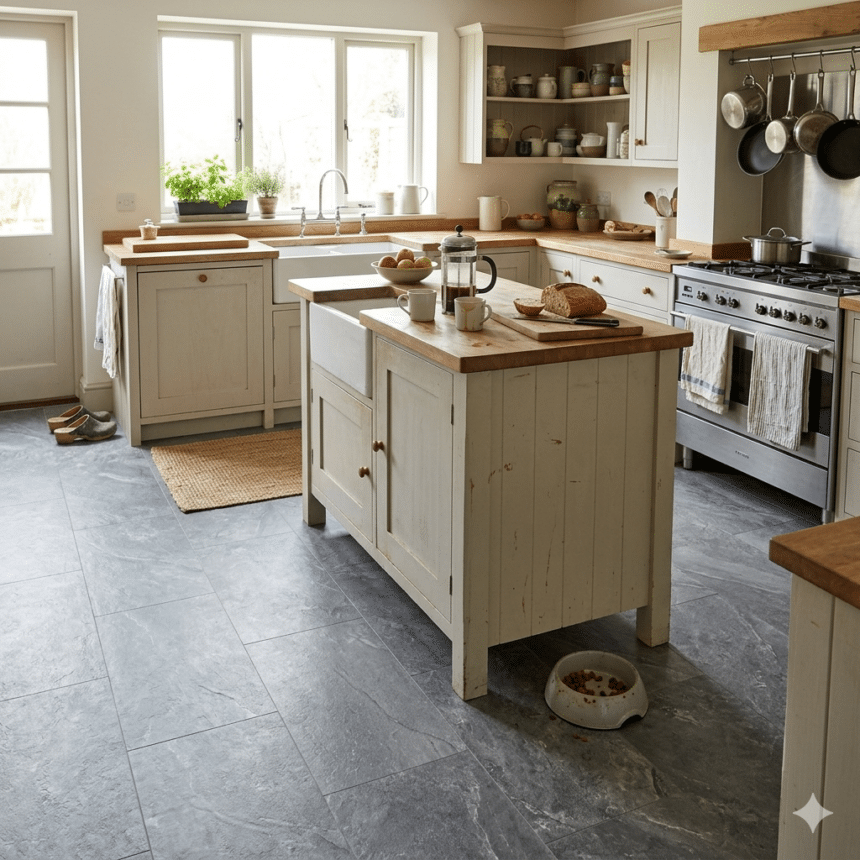
One of our best sellers. Mid Grey Slate Tile has the soft, layered look of natural slate in a mid grey that’s very forgiving of crumbs and paw prints. It’s 5.5mm SPC with a built-in underlay and an R10 slip rating, and each pack covers 1.48m². It’s a lovely match for painted and shaker style kitchens.
Ashdown Concrete Grey Tile SPC
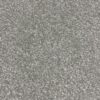
Concrete Grey Tile is one of our most sampled floors. It’s a cool, light grey with a subtle concrete texture that suits modern and industrial kitchens, and it pairs well with wood worktops if you want to warm it up a little.
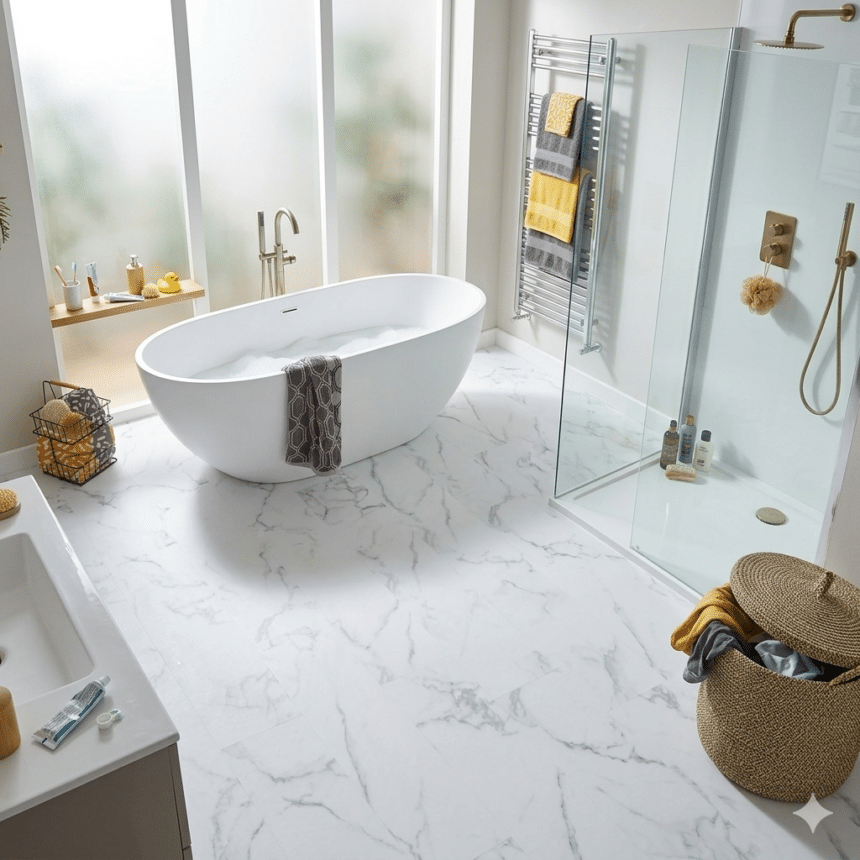
Ashdown White Marble Tile SPC
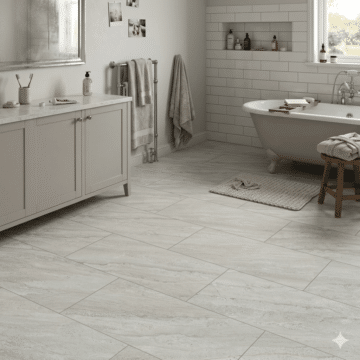
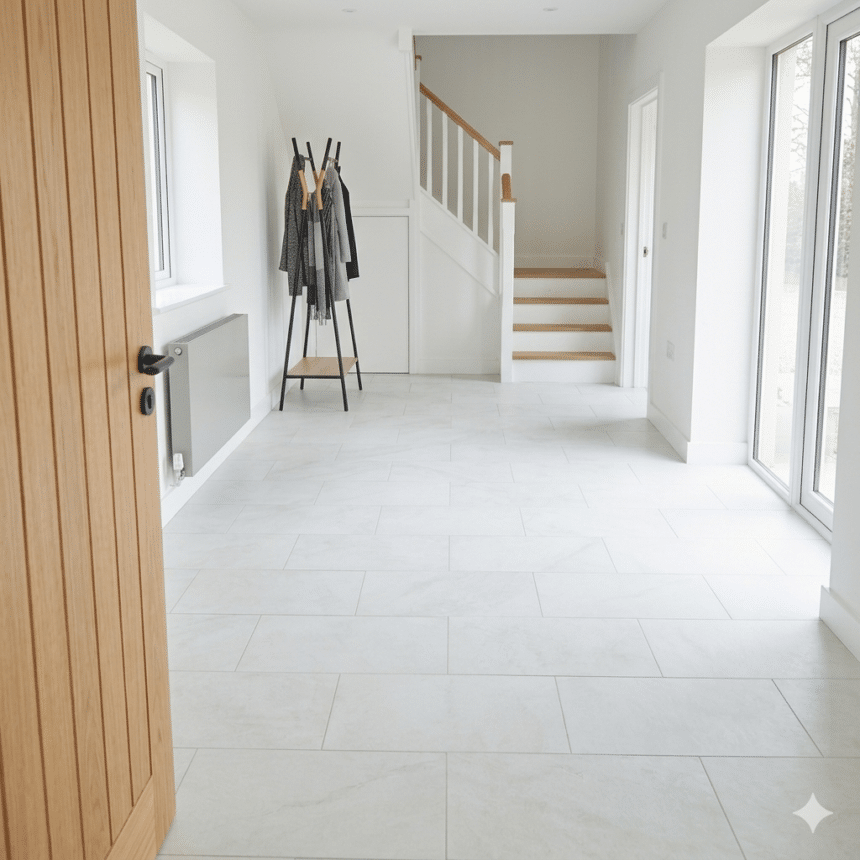
If you want a bright, clean kitchen, White Marble Tile is a popular choice. It has a square edge with no bevel, so the tiles butt up closely and read more like one continuous marble floor. It’s shown here in a bathroom, and it works just as well in a kitchen.
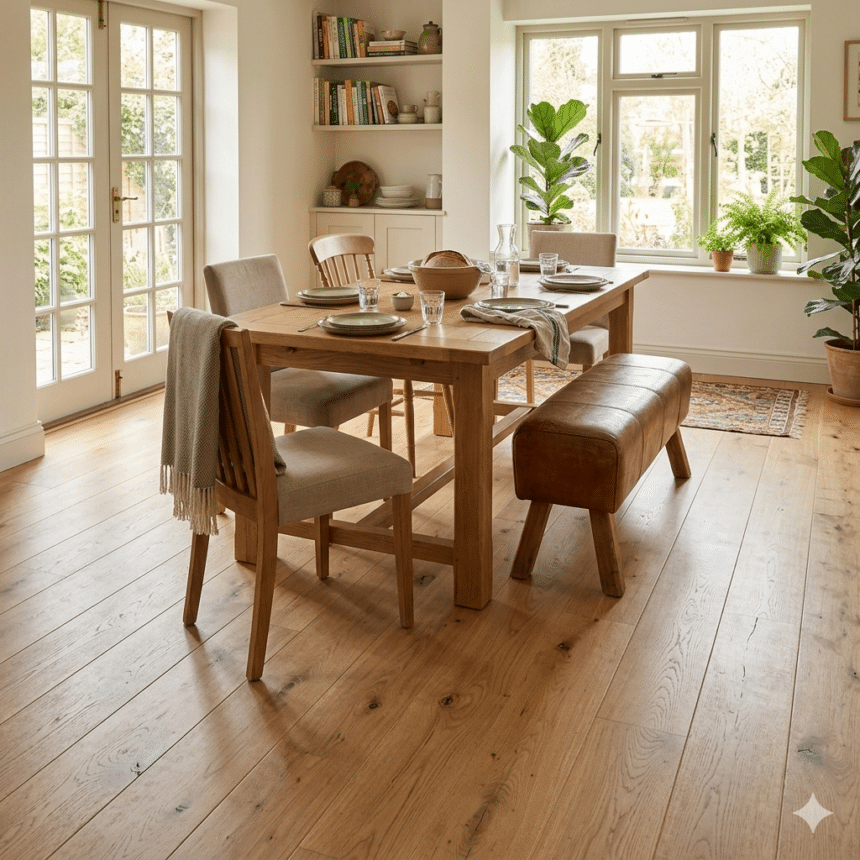
Ashdown Crafted Oak SPC
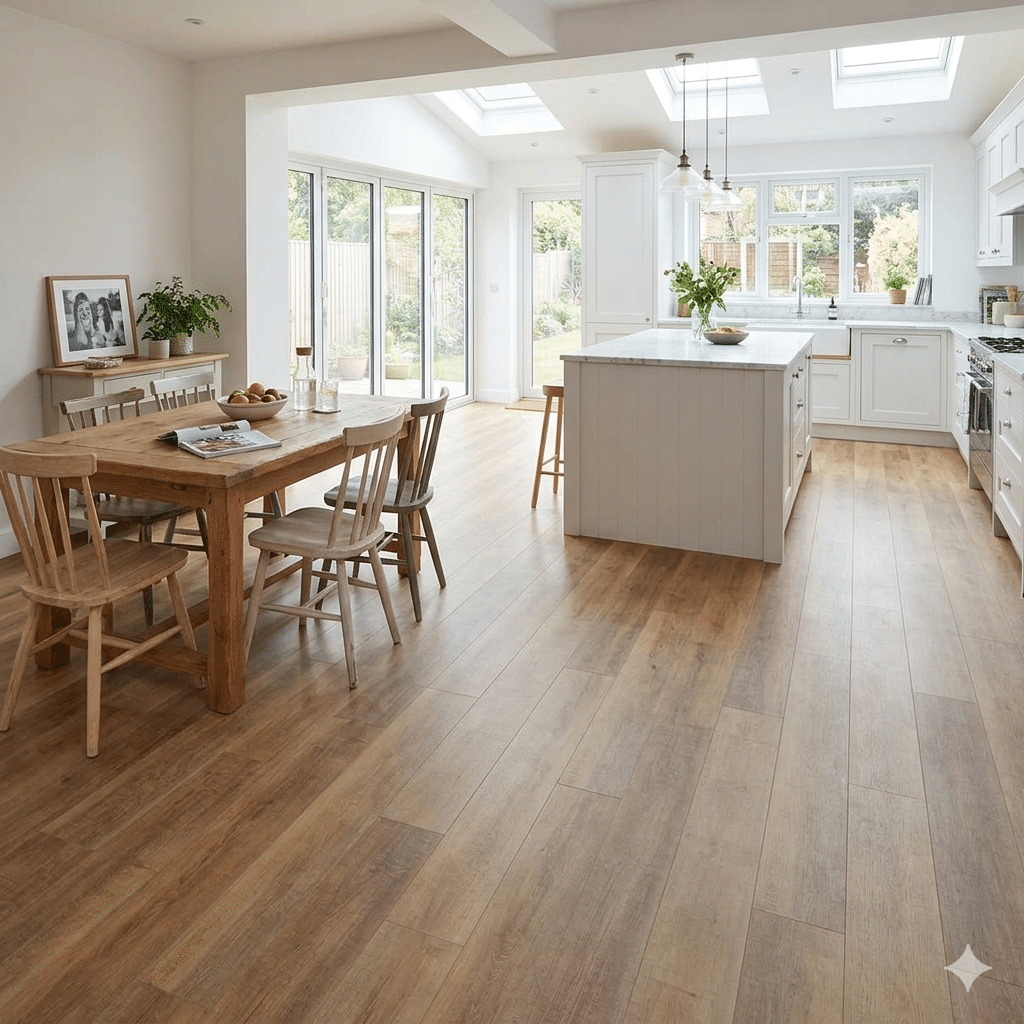
For a wood look, Crafted Oak is a warm mid oak plank with natural grain. It’s a good choice for open-plan kitchens where the floor carries on into a dining or living area. Each pack covers 2.23m².
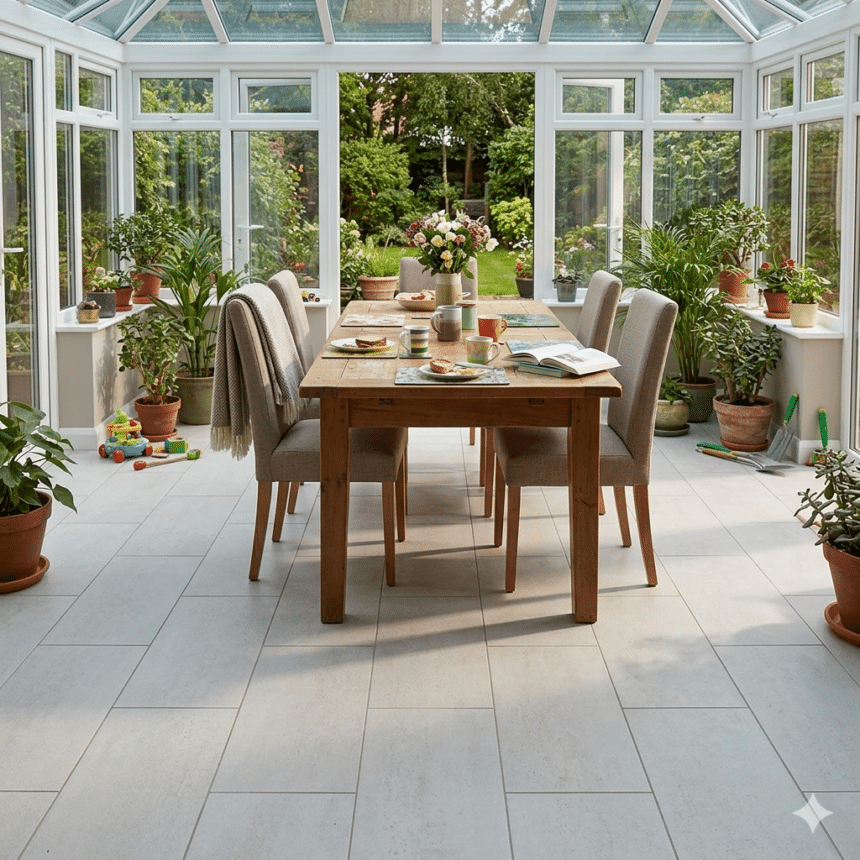
Vestige Tivoli and Urbino 8mm SPC
Tivoli and Urbino are bright white stone effects from our thicker Vestige range. At 8mm with a 0.5mm wear layer and a painted bevel edge, they feel substantial underfoot and bounce light around kitchens and conservatories.
River Stone Classic Limestone Tile LVT
Classic Limestone is a pale, softly textured limestone look in our glue down River Stone range. With a 0.55mm wear layer and a low slip risk rating in the wet, it’s a practical way to get a light stone floor that won’t feel cold.
Heritage Arran Oak Herringbone LVT
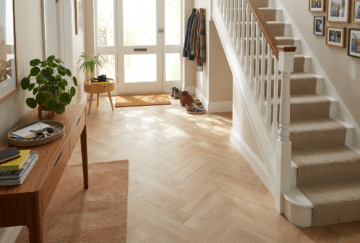
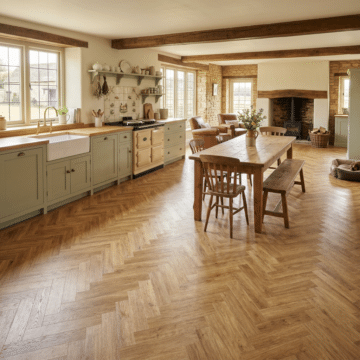
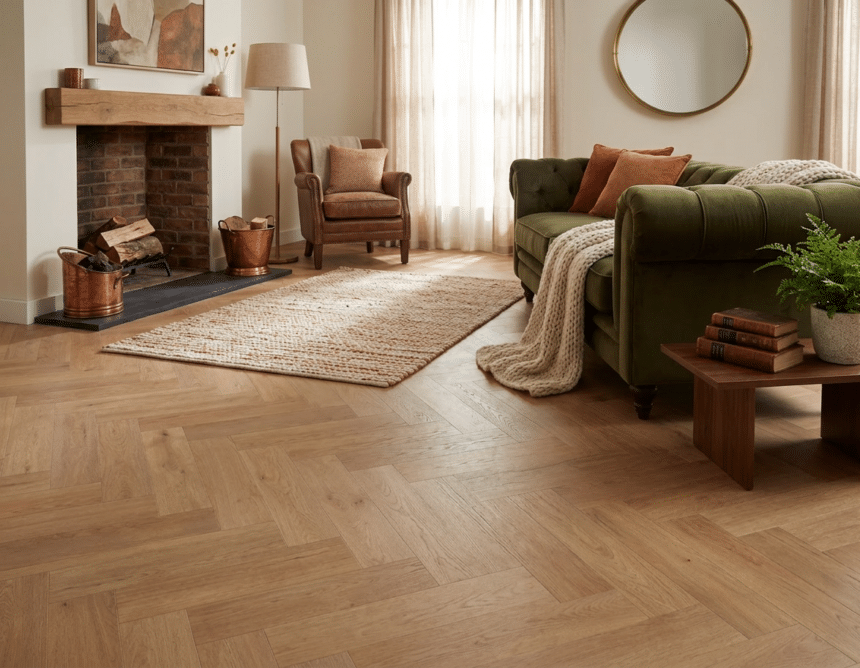
Arran Oak Herringbone is a glue down herringbone in a warm, honeyed oak. Herringbone works especially well in period homes and in kitchen diners where you want the floor to be a feature.
Arianna Terrazzo Milan Sheet Vinyl
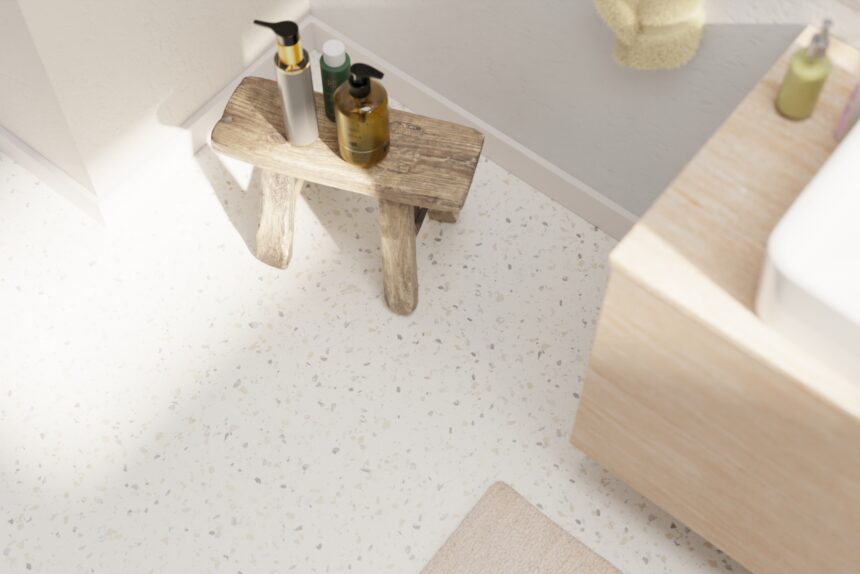
Our most popular sheet vinyl. Terrazzo Milan is a white and beige terrazzo with an extra thick acoustic backing, so it’s one of the most comfortable and quietest floors we sell. It comes in 2m and 4m widths.
Ajax Victorian Green Sheet Vinyl
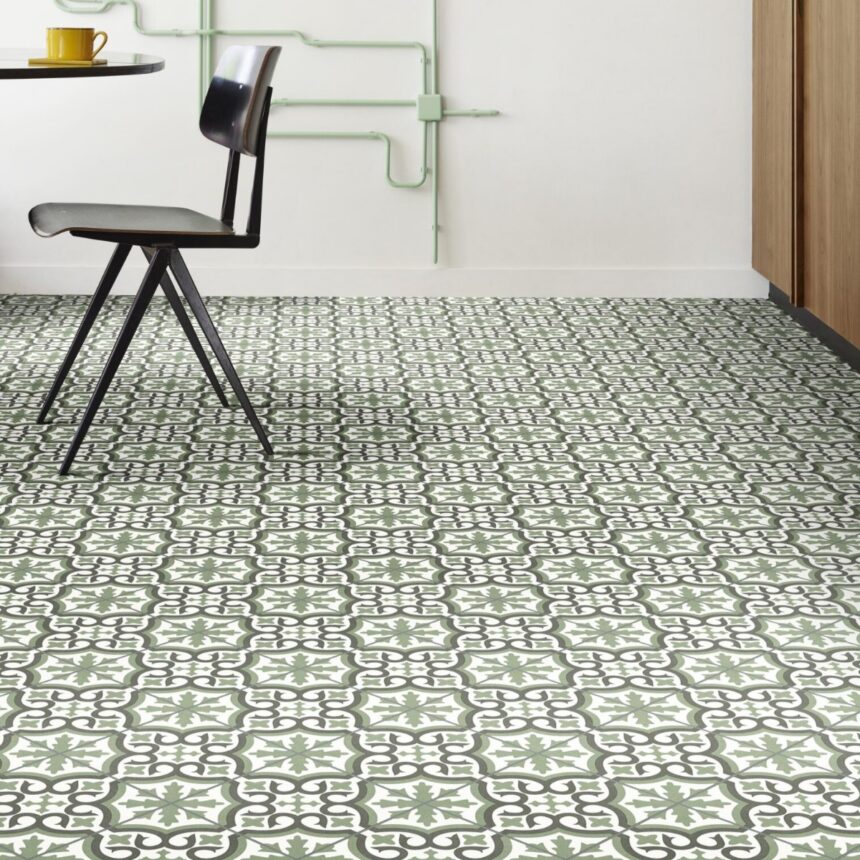
For something with more personality, Victorian Green is a green and white period tile pattern that looks great against plain cabinets. It’s 2.8mm with a cushioned backing.
Choosing a Style for Your Kitchen
Once you know which type of floor you want, it’s time for the fun part. A few things to bear in mind:
- Mid tones are the most forgiving. Mid greys and mid oaks hide crumbs, dust and paw prints far better than very pale or very dark floors.
- Light floors make small kitchens feel bigger. White marble, limestone and pale stone looks reflect light, which helps in north-facing or galley kitchens.
- Shaker kitchens suit natural looks. Slate grey tiles, warm oak planks, herringbone and Victorian tile patterns all sit well with painted shaker doors.
- Open plan works best with one floor. Running the same floor through the kitchen, dining and living areas makes the whole space feel bigger and more joined up. A wood effect LVT is usually the easiest look to carry from room to room.
- Bring your samples into the kitchen. Look at them next to your cupboard doors and worktop, in daylight and in the evening under your lights. Colours can change a lot between the two.
Before You Order
- Measure carefully. Measure the full floor area, including under any appliances that will have flooring beneath them, and add around 10% for cutting and fitting.
- Check the subfloor. SPC is forgiving of small dips, but glue down LVT needs a smooth, level surface. Floor preparation products and adhesives are in our accessories range.
- Think about underlay. Our Ashdown SPC has underlay built in. Other click floors may need a thin compatible underlay, which you’ll find in our underlay range. Glue down LVT and sheet vinyl don’t use one.
- Underfloor heating. Our LVT and SPC floors work with water and electric underfloor heating up to a surface temperature of 27°C.
- Finishing touches. Plan for threshold trims where the kitchen meets other rooms.
Order a Sample
Samples are £1 each and you can order up to four at a time. They usually arrive in 1 to 2 working days, and delivery on flooring orders is free across the UK. Pop them down on your kitchen floor for a few days and see how they feel with the rest of the room before you decide.
Frequently Asked Questions
What is the best flooring for a kitchen?
For most homes, vinyl flooring is the best all-round choice for a kitchen. SPC click vinyl and glue down LVT are fully waterproof, comfortable to stand on, easy to clean and available in realistic wood, stone and tile designs. Sheet vinyl is a good lower cost option.
Is vinyl flooring good for kitchens?
Yes. Vinyl is one of the most practical kitchen floors you can choose. All of our LVT, SPC and sheet vinyl is waterproof, and vinyl is warmer and softer underfoot than ceramic tiles.
Is SPC flooring good for kitchens?
Yes. SPC is fully waterproof, has a rigid core that copes with small dips in the subfloor and clicks together without glue. Our Ashdown range also has a built-in underlay and an R10 slip rating.
Can you fit click vinyl under kitchen units?
Generally, no. Click vinyl floats, so it needs to be able to move slightly. It should be fitted up to your units and island, with an expansion gap hidden behind the kickboards. Always check the fitting guide for the floor you choose. If you want one continuous floor under everything, glue down LVT is the better option.
What is the most hard-wearing kitchen flooring?
Of the floors in this guide, our glue down LVT has the thickest wear layer at 0.55mm, followed by our Vestige SPC at 0.5mm. The wear layer is the clear top layer that protects the design, so the thicker it is, the better the floor stands up to heavy use.
Is LVT slippery in a kitchen?
Our LVT and SPC floors are designed with grip in mind. Our Ashdown SPC has an R10 slip rating and our River Stone LVT is rated low slip risk when wet. As with any floor, wipe up spills quickly.
What flooring goes with a shaker kitchen?
Shaker kitchens suit floors with a natural, classic feel. Grey slate tile effects, warm oak planks, herringbone and Victorian tile patterns are all popular choices.
Can I use underfloor heating with vinyl flooring in a kitchen?
Yes. Our underfloor heating compatible LVT and SPC floors can be used with water and electric systems up to a surface temperature of 27°C.
 Free Delivery*
 Order Samples